Try “tiger”, “booking”, “timings”, “Chambal”, or “leopard”.

Kota · Rajasthan · Est. Tiger Reserve 2013

Where the Vindhyan hills still hold the roar of the wild

Mukundra Hills Tiger Reserve sits above the Chambal, on land once kept as the Kota royals' private hunting ground. Today its ridges, grasslands and river gorges are protected wild country — and a jeep safari is the way in.

759km²Reserve area, incl. Bhainsrodgarh core
03Merged sanctuaries: Darrah, Chambal, Jaswant Sagar
02Daily safari slots — dawn & dusk
50kmFrom Kota city centre
Bengal tiger resting in dry grass

About the reserve

From royal shikargah to Rajasthan's third tiger reserve

Mukundra takes its name from the hill range it sits within — two long, nearly parallel flat-topped ridges of the Vindhyan hills, running from the Chambal towards the Kalisindh. For generations it was the Maharaja of Kota's private hunting ground; today it is protected forest, grassland and river country roughly 50 km south-east of Kota city.

The reserve is not a single block but three sanctuaries knit together — Darrah, Chambal and Jaswant Sagar — with Bhainsrodgarh Sanctuary added to the core tiger habitat in a 2023 revision of the reserve's conservation plan. Tigers were reintroduced here by translocation from Ranthambhore, and the reserve is now managed under Rajasthan Forest Department guidelines.

  • Nearest city Kota (approx. 50 km)
  • Nearest railhead Kota Junction
  • Nearest airport Jaipur International
  • Terrain Vindhyan ridges, dry deciduous forest, river gorges
  • Regulated by Rajasthan Forest Department
  • Pre-1955Royal hunting ground (shikargah) of the Kota princely state, prized for its dense cover along the Chambal.
  • 1955Notified as Darrah Wildlife Sanctuary, the seed of the present-day reserve.
  • 2004Darrah, Chambal and Jaswant Sagar sanctuaries merged and declared Mukundra Hills National Park.
  • 2013Approved by the National Tiger Conservation Authority as Rajasthan's third tiger reserve.
  • 2013–15Tigers translocated in from Ranthambhore Tiger Reserve to re-establish a breeding population.
  • 2023Bhainsrodgarh Sanctuary added as a core addition under the reserve's updated Tiger Conservation Plan.

Safari packages

Choose how you want to see the reserve

Every safari runs under Rajasthan Forest Department permit rules, with a registered guide and driver. Pick a package below, then confirm dates in the booking form.

Jeep Safari

₹4,500 / vehicle, up to 6 guests

  • Private 6-seater 4x4 gypsy
  • Morning (6–10am) or evening (3–7pm) slot
  • Forest permit, guide & driver included
  • Ideal for families & first-time visitors
Book this safari

Custom & Multi-Day Tours

On request tailored quote

  • Multi-day safari itineraries
  • Stay + safari combinations
  • Kota local sightseeing add-ons
  • Corporate & group bookings
Enquire now
TimingsMorning 6:00–10:00am · Evening 3:00–7:00pm (seasonal shifts apply)
DurationApprox. 3 hours per safari drive
Distance coveredApprox. 20–22 km per route
Regulated byRajasthan Forest Department guidelines & seasonal closures

Book your safari

Reserve your jeep & slot

Fill in your travel details below. We calculate an estimated price instantly, then confirm your exact permit and seat availability with the Rajasthan Forest Department before your visit.

Base fare₹0
Vehicles required1
Estimated total₹0
Mukundra Hills Tiger Reserve Safaris is a private safari-planning service, not an official Government of Rajasthan portal. All safaris run under Rajasthan Forest Department rules — final permit issue, zone allotment and seat availability are confirmed by the department, and are subject to weather, monsoon closures (typically July–Sept) and conservation-driven changes.

Why book with us

Hassle-free, forest-department-aligned booking

  • Government-permitted safari vehicles & verified guides
  • Local support before, during and after your visit
  • Best-available routing for tiger & leopard sightings
  • Guidance on the best zone for the season

Prefer to talk it through first? Call or WhatsApp +91 11111 11111


Limited Slots Available

Safari entries are controlled and limited per day. Early booking ensures better availability and preferred time slots.

Wildlife you may encounter

A working ecosystem, not a checklist

Grassland, dry deciduous forest and Chambal-linked wetlands support predators, prey and birdlife side by side. Sightings are never guaranteed — they depend on season, weather and the animals themselves.

Bengal tiger portrait

Bengal Tiger

Apex predator
Leopard on a rocky outcrop

Leopard

Rocky escarpments
Leopard on a rocky outcrop

Sloth Bear

Forest floor forager
Leopard on a rocky outcrop

Striped Hyena

Dusk & dawn forager
Leopard on a rocky outcrop

Chital & Sambar

Grassland grazers
Wild boar

Nilgai & Wild Boar

Woodland edge species
Mugger crocodile resting on a rock

Mugger Crocodile

Chambal river stretch
Hanuman langur sitting and observing

Common Langur

Forest & fort-wall troops

Explore

Beyond the safari drive

Ways to go deeper into the landscape, before or after your jeep safari.

01

Landscape

Twin flat-topped Vindhyan ridges running from the Chambal towards the Kalisindh, cut through with valleys, cliffs and seasonal streams.

Read the terrain notes →
02

Biodiversity

From apex predators to pollinators and migratory birds — the small species are often the clearest sign of a healthy reserve.

See the species list →
03

Field Reports

Short, dated observations from guides and naturalists on what the reserve is showing this season.

Read field reports →
04

Kota, nearby

Pair your safari with the Chambal riverfront, the Garadia Mahadev viewpoint, or an afternoon at Seven Wonders Park.

Plan the rest of your trip →

Explore Kota's hidden gems

Explore Kota Attractions

Kota is easy to combine with a Mukundra Hills safari — the city sits close to the reserve and offers a mix of riverside heritage, viewpoints and family-friendly parks worth an extra day on either side of your trip.

Nearby attractions

Must-Visit Attractions in Kota

A few places locals and repeat visitors recommend for the time you're not out on safari.

Sunset over a river with boats, India
01

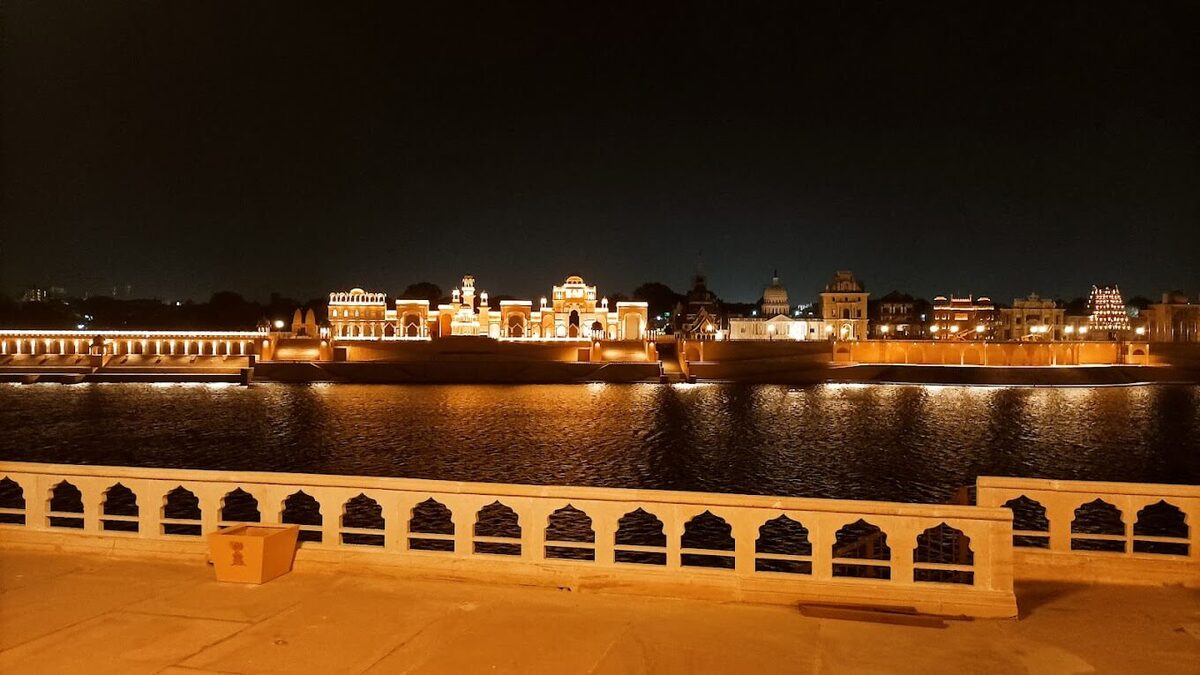
Kota Riverfront

A large heritage riverfront development along the Chambal, built around themed ghats, gardens, fountains and sculpture-lined promenades — one of Rajasthan's newer city landmarks and a pleasant evening walk.

Temple complex built into a cliffside
02

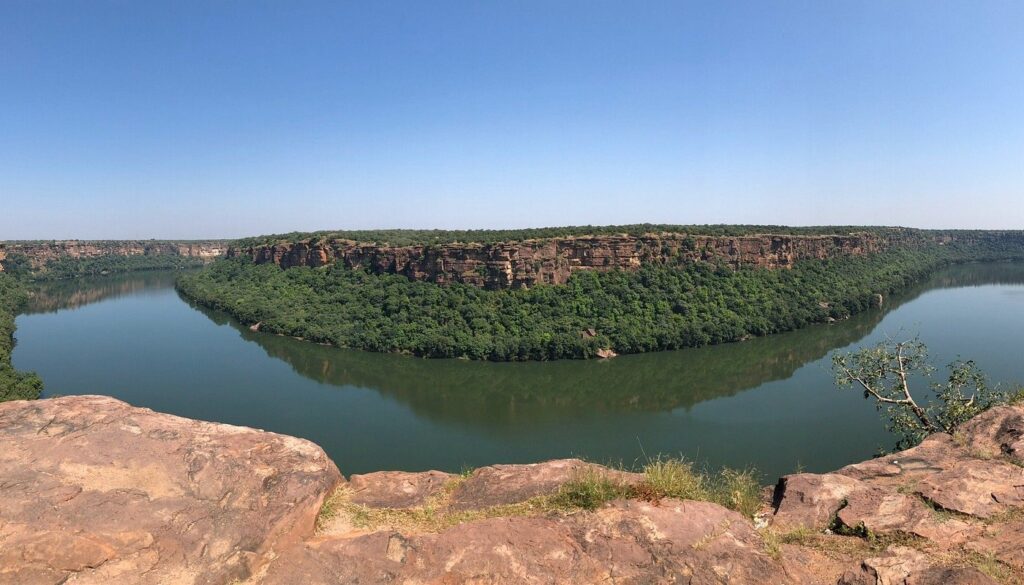
Garadia Mahadev

A cliffside temple and viewpoint overlooking a dramatic horseshoe bend in the Chambal River. It's a short drive from the city and one of the best spots nearby for sunset views over the water.

Aerial view of a lakeside city park in India
03

Seven Wonders Park Kota

A themed city park with scaled-down replicas of famous monuments — including the Taj Mahal, Eiffel Tower and Statue of Liberty — set beside Kishore Sagar lake. A relaxed, family-friendly outing.

Field reports

Notes from the reserve

Short, dated field notes shared by our guiding team — read for context, not as a sighting guarantee.

June · Pre-monsoon

Water points draw everything in

As temperatures climb, the reserve's remaining waterholes become the most reliable place to sit quietly — deer, boar and predators alike shorten their range around them.

August · Monsoon

Grasses take over the hillsides

The safari zones close to vehicles during the core monsoon months so grassland and breeding animals get an undisturbed season — a good time to plan an autumn visit instead.

December · Winter

Best light, clearest birding

Cool mornings bring dense mist over the river stretches by dawn, followed by some of the clearest skies of the year — strong months for both wildlife and landscape photography.

Resources

Good to know before you go

Practical answers to the questions we hear most from first-time visitors.

October to June is the open safari season. Winter (Nov–Feb) offers the coolest, clearest conditions; April–June is hot but brings animals to waterholes more predictably. The reserve typically closes to vehicle safaris during the core monsoon months (roughly July–September) for habitat regeneration.

Forest permits are limited per zone and slot, so we recommend booking at least 3–5 days ahead in peak season (Nov–Feb) and 24–48 hours ahead in the shoulder months.

Neutral-coloured clothing, a hat, sunscreen, water, and a valid photo ID (required for the forest permit). Binoculars and a zoom lens are recommended — flash photography of animals is not permitted.

No responsible operator can guarantee a sighting. Mukundra has a lower tiger density than reserves like Ranthambhore, which also means far fewer vehicles per sighting and a quieter, less crowded safari overall.

Submit your booking request through the form above; our team confirms the exact permit cost and shares a secure payment link or on-arrival payment option once your zone and slot are locked in.

Visitor notes

What travellers say after their safari

“We went in expecting a quiet drive and left with a leopard sighting on our very first evening. Our guide knew exactly where to wait.”

— Visiting family, Delhi

“Almost no other vehicles on our route the whole morning. If you want the wild without the crowds of Ranthambhore, this is it.”

— Wildlife photographer, Mumbai

“Booking was simple and the team kept us updated on permit status right up to the morning of our safari.”

— Solo traveller, Bengaluru

Contact us

Plan your visit

Reach out with dates, group size, or any special requirements — we'll help you build the right safari.

Call / WhatsApp

+91 11111 11111

Office

Near Mukundra Hills Tiger Reserve, Kota, Rajasthan, India

Office hours

7:00am – 8:00pm daily, for booking calls & WhatsApp